AFTER ANDY WARHOL
Reflections on the artistry of Andy Warhol and Robert Singleton and the chance to see their side-by-side exhibits one final week in West Virginia's capital. | March 22, 2026
By Douglas John Imbrogno | WestVirginiaVille.substack.com | March 22, 2026
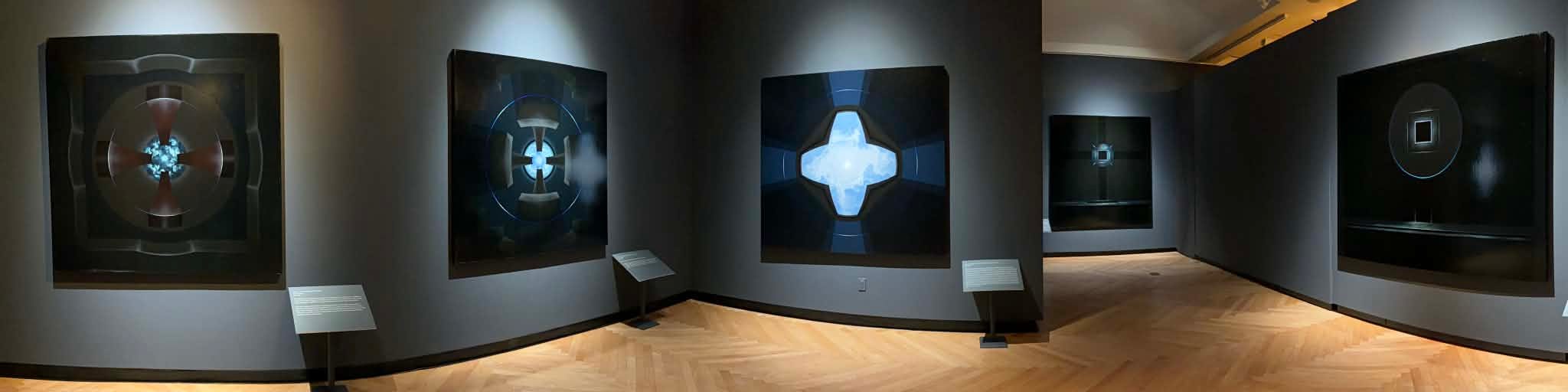
I HAVE ALREADY POSTED about the remarkable MEMENTO MORI exhibit of five large-format paintings by Robert Singleton at the Clay Center’s Juliet Art Museum, now closing down its run in West Virginia’s capital. I wish to share two things for those who have not see the exhibit and also for those who have. And also to offer a comparison with the big Andy Warhol show you pass through to get to MEMENTO MORI, whose run has been extended through Sunday, March 29, 2026. It is most definitely worth the drive, bus, Uber, skateboard or electric scooter to get you there. The intimate alcove housing these big works, seen in muted lighting as ethereal music plays, is an exquisite way to encounter these masterworks by the 87-year-old painter, who continues to create atop a mountain in the West Virginia outback.
For those who have already seen these paintings, either at the Clay Center or in a previous show at Gradient Projects in Thomas, W.Va., the video clip below adds some context for these powerful works. I pulled the clip from the 2023 documentary Bobby Lee Messer and I crafted titled ‘HOUSE IN THE CLOUDS: The Artistic Life of Robert Singleton.’ The MEMENTO MORI paintings were inspired by Robert’s bedside farewell to his dying father with whom he long had a troubled relationship. As I wrote in my previous post about the Clay Center show:
In his father’s last hours and final moments of life, without any words being spoken, a powerful communion of forgiveness and connection occurred as the son noted the light in the eyes of his father as he departed this world. “I saw him see the something beyond,” Singleton observed.
Below is a 3-min, 25-sec. segment from ‘HOUSE IN THE CLOUDS,’ in which Robert reflects further on that experience. As he speaks, a sequenced animation unfolds titled ‘Journey’ that Robert made of these paintings, set to the same celestial music by Dan Morro that you hear at the Clay Center exhibit.
‘JOURNEY’: A HOUSE IN THE CLOUDS excerpt | CLICK TO VIEW
It’s a Warhol Thing
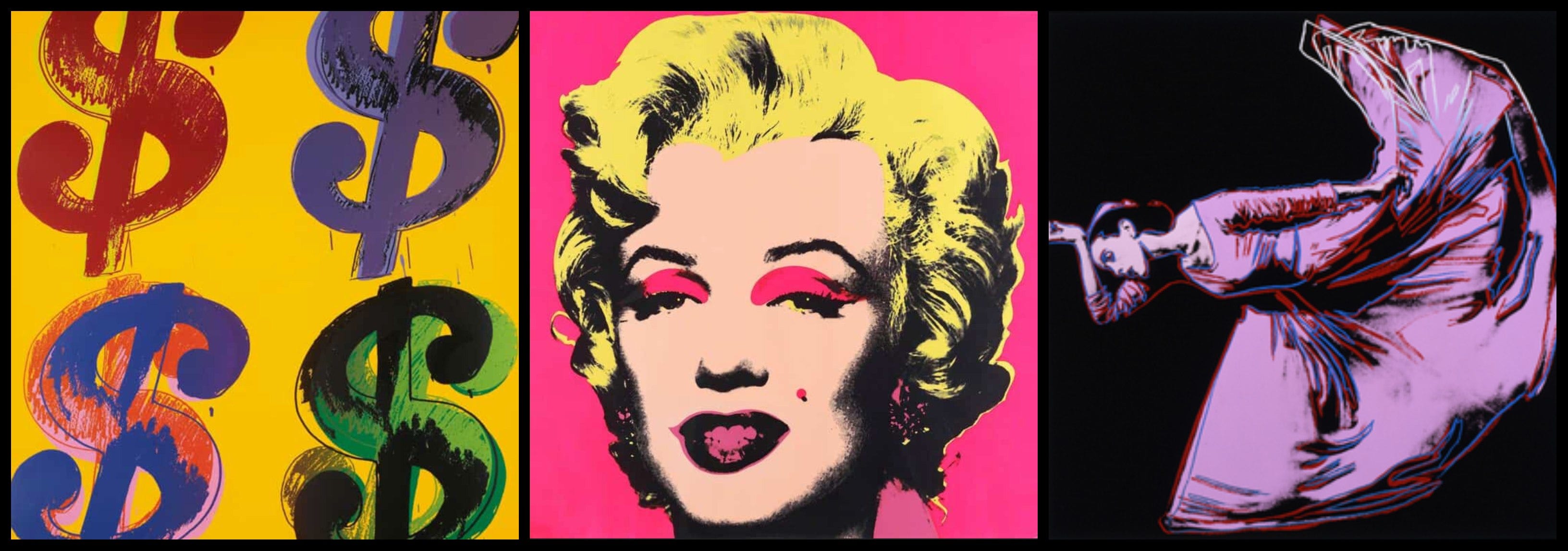
ANYONE WHO GOES to see MEMENTO MORI has an uber-famous-guy and pop art experience to pass by first. As you enter onto the second floor of the Juliet Museum, you encounter the vast, colorful exhibit ‘Good Business: Andy Warhol’s Screenprints, which closes with a Sunday, March 29 reception, while the Singleton exhibit is in an alcove you enter off to the left of the Warhol show. The one-minute Charleston Gazette-Mail video below gives a good glimpse of the many prints on view, including Warhol’s iconic imagery of Campbell soup cans (he didn’t do just tomato soup); his full-lipped, psychedelic Marilyn Monroe, by which generations now first encounter her face; and the artist’s ongoing experiments with appropriated imagery, from car crash fatalities, to restaurant receipts, to dollar- bill collages.
A couple of thoughts came to my art-rube mind while experiencing so many manifestations of Warhol’s prints at once, all of which are very vibrant on the surface. (More educated art-o-philes are welcome to add their own comments at the bottom of this post if you feel me too much the philistine with what I am about to say.)
Charleston Gazette-Mail video by Christopher Millette
Warholian Thought No. 1
Andy Warhol was a pioneer—if not maybe a key progenitor—of the meme. Grab an image, colorize it, frame it, post it, and move on, burning an unexpected twist onto your retina of an over-familiar object you otherwise had stopped noticing. A can of soup by an iconic company, for instance. Pass it on!
Warholian Thought No. 2
Warhol accomplished one very significant and radical thing which long outlives him. It was this: Anything and everything we see around us might also be seen as a work of art. Especially if you re-frame it, wildly re-color it, or multiply it into a contrasting, competing collage that makes you take a second glance at something your eye passed over before it ever got Warhol-ized. (Or maybe Warhol-eyed.) He was among the most notable—and notorious, perhaps—of artists who looked around at common, everyday imagery and, then, juiced what he saw with a color and a frame. Not to mention a reproducible print that made him not a few bucks. His gaze made art, for instance, from the receipt just handed him for a cup of coffee. At the back of a dollar bill. At countless advertisements trying to suck you in and sell you something. At a familiar black-and-white PR photo of a major star, which he was about to etch into our common consciousness for a hundred years by the maybe not-so-simple act of re-framing and re-imagining the face of an iconic hearthrob.
Warholian Thought No. 3
His screen-printing was also an act of clever and creative artistic entrepreneurship. As the Clay Center website notes:
‘Warhol was many things—a painter, photographer, film director, entrepreneur, and commercial artist. Printmaker is a critical part of that extensive resume … The salability of prints generated income that Warhol could use to fund his more avant-garde projects, as well as raise funds for causes that were personally important to him.’
Warholian Thought No. 4
Yet here we are in 2026, and if you spend five minutes on Instagram, Facebook, YouTube, Reddit, TikTok, or any of countless platforms and sites, you now see Warholian-style imagery everywhere. This is so because everyone is able to quickly slap saturated colors and offbeat filters on imagery they themselves may have appropriated or personally shot with the powerful cameras most of us carry in our pockets beside a wadded-up Kleenex. After twice spending time with a room full of Warhol prints on separate visits to Robert Singleton’s MEMENTO MORI show, a thought kept returning to me. Warhol’s screenprints no longer possess—at least to this art rube’s eyes—the power to surprise or engage me at anything more than the level of: ‘Oh, that’s cool. Oh, I’ve seen that before. Oh, that looks like something I saw last night on Instagram …’
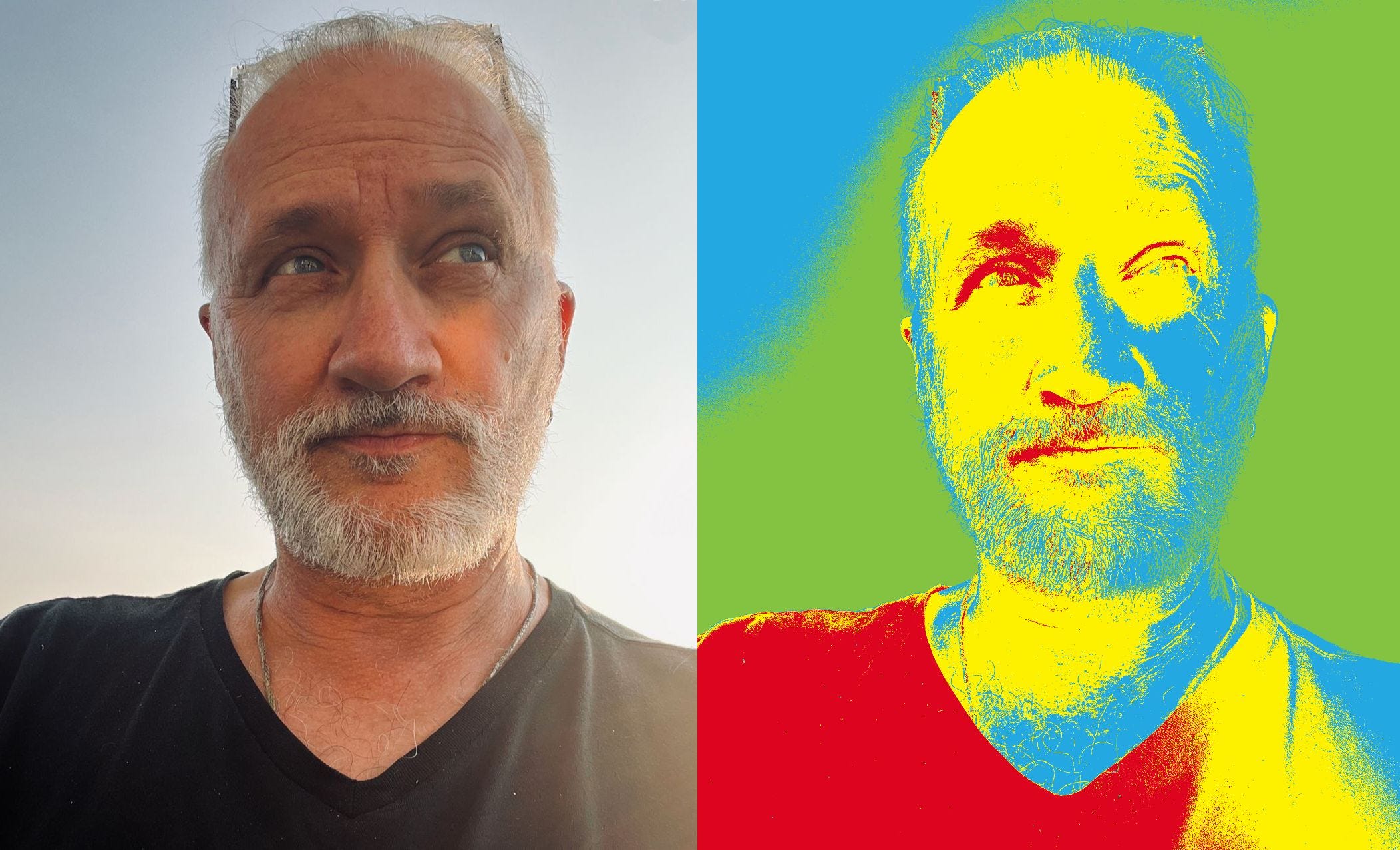
My tentative point is that time and technology have caught up to what Andy Warhol was doing with so many of his prints: looking, colorizing, and framing what he saw as he moved around his world. Curious as to whether there was a directly-named ‘Andy Warhol filter’ out on the World Wide Web (there had to be, right?), it took me all of five minutes via this link to Warhol-ize my own visage. It’s not quite as sexy as Marylin Monroe’s pulchritudinous portrait. But I wonder if one of us slipped our Warholian image into a show as big as the one at the Clay Center, if anyone would even blink?
POSTSCRIPT: It’s a Singleton Thing
ALL OF THAT IS TO SAY one final thing. Once you have had your fill of Andy Warhol’s glam and surface-gleam prints, take a left turn into the muted alcove of MEMENTO MORI: Paintings by Robert Singleton. Your mileage may vary, but time and technology have most certainly not passed these works by. I have been blessed to hear Robert talk in person about the corresponding color wheel artistry and sophisticated layering that lend these works such infinite visual depth. Not to take anything away from what Andy Warhol accomplished in his notable, influential career, but I am glad there is a left turn such as the one you may take for another week at the Clay Center, into an entirely other iconic world.
You can see Robert Singleton at work in his studio and hear him discuss some of his artistic mojo in HOUSE IN THE CLOUDS. To view the full 1-hour, 9-minute film, watch it on YouTube for free at this link or watch it right here, right now, right below these words.
CLICK TO VIEW DOCUMENTARY
Support this billionaire-free independent web journal by donating a $5 cup of coffee of support (or a few cups!) at my support page — point your camera phone at the QR code below or click to: coff.ee/douglasjohnimbrogno. Subscribe to receive new WestVirginiaVille posts in your e-mail box.